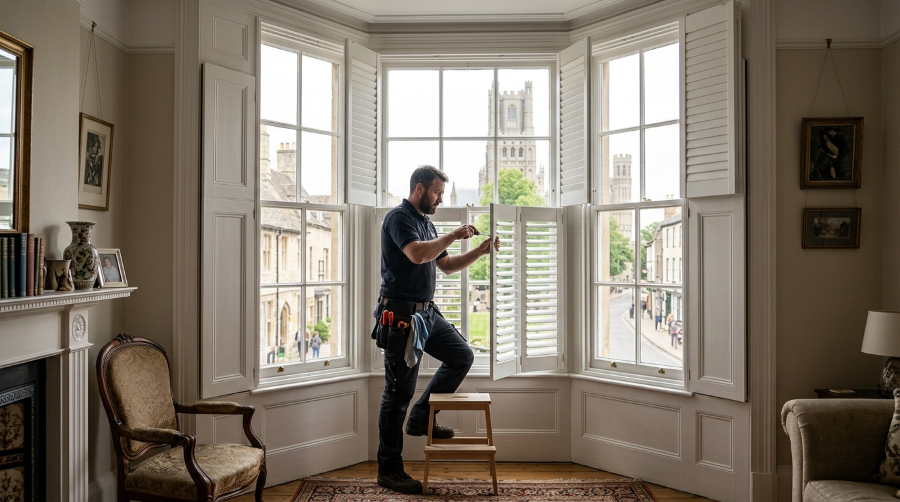
Cambridge has no shortage of handymen - from the terraced streets of Mill Road and Romsey out to the commuter villages of the Shelfords and Cambourne, the cathedral city of Ely, the Ouse-valley towns of Huntingdon and St Neots and the Fenland market towns of Wisbech and March, every part of the county has its own: the name passed round a village WhatsApp group, the card in the corner-shop window, the firm paying to sit at the top of your search. Finding a handyman here is the easy part.
The catch is that "handyman" isn't a protected job title. Nobody has to pass an exam, hold a qualification or join a register to use the word, so the listings blend skilled, established tradespeople with chancers who picked up a drill last week. That leaves the checking to you. This guide walks through what a Cambridge handyman actually does, the work they're not allowed to touch, where to look, and the handful of checks that tell a safe pair of hands from a costly mistake.
What a Cambridge Handyman Actually Does
A handyman is a jack-of-all-trades by design. They take on the small, varied jobs that aren't worth a specialist trade's minimum charge - and the staples look much the same whether you're in a Gault-brick Mill Road terrace, an Ely townhouse or a Peterborough new-build:
- Putting things on walls: televisions, shelves, mirrors, pictures, curtain poles, blinds and shutters.
- Building flat-pack: wardrobes, beds, desks and units - often the delivery still boxed in the hallway.
- Doors and security: freeing a binding door, swapping handles and locks, adjusting a uPVC door mechanism, fitting a video doorbell, sealing draughts.
- Small plumbing jobs: a new washer on a dripping tap, plumbing in a washing machine, a replacement toilet seat, fresh silicone round a bath, descaling a furred-up showerhead, bleeding a radiator or swapping a thermostatic valve.
- Kitchens, bathrooms and decorating: realigning cupboard doors and swapping worn hinges, re-grouting and re-sealing tiles, filling, sanding and painting small patches, and fitting lights, splashbacks and under-cabinet strips.
- Odds and ends: boxing in pipes, fitting a loft ladder and boarding a loft, fitting a cat flap or a coat rail, repairing a fence panel or re-hanging a gate, repointing and weatherproofing the older stock, and working through the list stuck to the fridge.
If there's one way to get value from a Cambridge handyman, it's to hand them a list rather than a single job. Because the first hour and the call-out both carry a premium, five jobs in one visit costs far less than five separate trips. Our guide to handyman costs in Cambridge breaks down the rates, that first-hour loading and why there's no zone or congestion charge.
The Jobs They Can't Legally Take On
Here's where the open door closes. Some work is off-limits by law, however breezily someone offers to "sort it" - and the cost of getting it wrong runs from a failed house sale to a house fire. Steer well clear of any handyman willing to take on:
- Gas - boilers, hobs, fires, anything joined to the supply. Legally this is for Gas Safe-registered engineers only.
- Notifiable electrics - new circuits, fuse boards, and most work in kitchens and bathrooms fall under Part P and need a registered electrician. A like-for-like socket swap is a common grey area; a rewire is not.
- Knocking through - taking out or altering a load-bearing wall needs proper design and usually building control sign-off.
- Listed and conservation work - much of central Cambridge, Ely and the Wisbech Brinks is listed or in a conservation area, where external alterations need consent and like-for-like brick and lime mortar. A good handyman keeps to routine repairs and flags the rest.
- Asbestos - a genuine risk in the post-war and new-town housing across Peterborough and the Fenland estates. Anything that might disturb it is for a licensed removal specialist.
The mark of a good handyman is that they hand these jobs on without being asked - a quick "you'll want a Gas Safe engineer for that" is reassurance, not a brush-off. Our guide to what a handyman can legally do in the UK sets out the full list.
Where to Find One in Cambridge
There's no perfect single source. Each route has a weakness, so the smart move is to find a name in one place and verify it in another before you hand over any work.
Word of mouth
Ask around. In a terraced street in Romsey or a village near the Shelfords, a neighbour who can point at a finished job and say "he did ours" beats any advert.
Review directories
Checkatrade, MyBuilder, Rated People and TrustATrader let you filter by area. Dig into the recent, detailed reviews rather than trusting the headline star rating.
TrustMark
TrustMark is the only government-endorsed scheme for home tradespeople. A registered firm has been checked against set standards and comes with a dispute route if a job goes wrong.
Local directories
This directory lets you browse by area and message handymen yourself, free. It finds you candidates - it doesn't vouch for them, so keep reading.
Worth being blunt about: a listing on any directory, this one included, is not a stamp of approval. We don't vet the businesses we list - see how this site works. A directory gets you a shortlist fast; turning that shortlist into a safe hire is the job of the checks below.
How to Tell a Good One From the Rest
With no licence behind the trade, a few minutes of checking is your real protection. The danger is the operator who's hard to trace once they've gone, so the whole aim is to confirm there's a genuine, accountable business behind the quote before any money moves.
Do check for these
- Current public liability insurance - and ask to actually see the certificate
- A business you can pin down: a real name, a steady phone number, an address
- Detailed recent reviews, ideally with a reference or two you can ring
- A written quote spelling out the work, whether VAT applies, and how they bill
- Honesty about their limits - happy to say a job needs a registered trade
Walk away from these
- Cash only, no paperwork, and a hint to keep it off the books
- A large deposit demanded before a thing has been done
- No quote in writing, or a number that keeps creeping up
- Nothing you can verify - no address, no reviews, just a mobile
- Pushy "today only" pressure or a woolly description of the work
Insurance is the one to insist on. In a terrace in Romsey or a listed college-quarter building in central Cambridge, a wrong drill into next door's masonry or the historic fabric quickly becomes someone else's problem too, and public liability cover is what stops that turning into your bill. It isn't legally required - which is exactly why you should prefer someone who carries it.
What to Expect: Quote, Visit and the Job
Once you've picked someone, the job tends to run to a familiar pattern. Knowing the shape of it makes the odd ones easier to spot:
- The quote. A clear, small job might get a fixed price by phone or text; a longer list usually means photos or a quick look first. A quote is a firm figure - an estimate can move - so be clear which you've been given.
- Timing. The good ones are booked up, so unless it's an emergency (which costs more) expect a date a few days out and a rough arrival window. The student lets and rented terraces of Cambridge, and the rented stock of Peterborough and the Fenland towns, keep turnaround work steady year-round.
- Materials. Usually billed on top of labour. Settle who's buying the bracket, the lock or the sealant, and whether they add a small sourcing mark-up.
- Travel. In your own town travel is rarely charged - no zone, no congestion charge, no toll. A job out across the Fens to Wisbech or March, or one that means crawling through the congested city centre, may carry a little time, so check.
- Payment. Settle up once you've checked the work, by a method that leaves a trail, and keep the receipt.
Local Quirks: The Stock, the Water, the Fens and the Charge-Free Roads
A few Cambridgeshire things shape the job in ways they wouldn't elsewhere. Worth weighing up before you book.
Gault brick, college stock and new-build
Cambridgeshire's stock is varied: Cambridge's listed colleges and conservation streets, the pale 'Cambridge brick' (Gault) Victorian terraces of Mill Road and Romsey and the Edwardian villas; the cathedral-city stock of Ely; the Georgian market towns of Huntingdon, St Ives and St Neots; Wisbech's Georgian merchant Brinks; Peterborough's Fletton-brick terraces and 1960s-70s new-town townships; and a great deal of new-build at Cambourne, Eddington, Trumpington and Northstowe. Solid brick and old walls drill and repair differently to new-build plasterboard, so a good handyman knows the local stock - and keeps to routine work on anything listed.
Hard chalk water, so descaling
Cambridgeshire's water is hard, off the East Anglian chalk aquifer - among the hardest in the country - so limescale furs up showerheads, taps, kettles and the elements in appliances and crusts up around seals. Descaling fittings, renewing furred-up sealant and clearing clogged showerheads are routine handyman jobs here - the opposite of the soft-water North - alongside the everyday list of mounting, flat-pack, doors, sealing and decorating.
The Fens, peat shrinkage and flood risk
Much of the north of the county - Wisbech, March, Chatteris, Whittlesey and the Peterborough fen-edge - is drained farmland on peat that shrinks as it dries, much of it at or below sea level behind banks and pumps, with the southern belt on shrink-swell Gault and Oxford clay. That long history of ground movement leaves doors and windows binding and cracks returning, with serious flood risk along the Great Ouse and the Nene, so easing, re-hanging and crack repairs and damp checks are steady work on the low stock.
No zone, no congestion charge, no toll
There's no Clean Air Zone in Cambridgeshire, no congestion charge - Greater Cambridge's proposed Sustainable Travel Zone, a £5 daily charge, was dropped in 2023 - and no toll crossing anywhere, so there's no daily van charge. The one thing that can carry a cost is travel: it's a large county split by the flat Fens, and Cambridge itself is congested, so hiring local to your town keeps the bill down.
Your Rights If Something Goes Wrong
Even a casual, no-frills hire leaves you with more protection than people expect. The Consumer Rights Act 2015 writes a guarantee into every service contract: the work must be carried out with reasonable care and skill, judged against what a competent tradesperson would do. Fall short of that and the handyman is in breach - and no small print can sign that duty away.
So if a job is botched, the first move is usually to have them put it right at no extra cost, before any talk of money back. To stand on firm ground:
- Hold on to the quote, the messages and every receipt.
- Put the complaint in writing - calm and specific - and give a fair chance to fix it.
- Still stuck? Citizens Advice can map out your options, and the small claims court handles what you can't settle between you.
It's the cleanest argument against the cash-in-hand, no-paperwork job: the moment something goes wrong, a price with nothing in writing behind it leaves you with nothing to point to.
Frequently Asked Questions
Do you need a licence to be a handyman in Cambridge?
No - there's no such thing as a handyman licence anywhere in the UK, and Cambridge is no exception. Anyone can offer the service with no training behind them, which is precisely why the checking falls to you: public liability insurance, a traceable business, and genuine reviews. The exceptions are gas and most fixed electrical work, which by law only a registered engineer can carry out, and external work on Cambridge's listed and conservation-area buildings, which can need consent.
What's the best way to find a reliable handyman in Cambridge?
There isn't one single answer. A neighbour's recommendation is usually the most reliable, because you can go and look at the finished job. Failing that, review sites like Checkatrade, MyBuilder, Rated People and TrustATrader let you compare locals, and a TrustMark-registered firm has passed the government-backed scheme's checks. Most handymen cover their own town and the nearer villages, so hiring someone from your own patch keeps travel down across a county split by the flat Fens. Whichever route you use, still confirm insurance, references and a written quote yourself.
What services does a Cambridge handyman provide?
Everyday repairs and small improvements: wall-mounting TVs and shelves, flat-pack assembly, sorting sticking doors and windows, hanging blinds and shutters, small plumbing like a dripping tap or plumbing in a washing machine, resealing baths and re-grouting tiles, descaling limescaled showers and taps, swapping radiator valves and bleeding radiators, fitting lights and doorbells, filling and painting, fitting loft ladders, and light carpentry. With Cambridgeshire's mix of Cambridge's Gault-brick and college-quarter stock, the cathedral city of Ely, the Ouse-valley market towns, Peterborough's new-town townships and the Fenland market towns, plenty also work through landlord, student-let and end-of-tenancy turnarounds, repointing and weatherproofing, and higher-spec finishing on the commuter-belt homes. What they won't touch is gas and most fixed electrical work, which need a registered professional.
Should a Cambridge handyman have insurance?
There's no legal duty for them to carry it, but treat it as essential. Public liability cover pays out if their work damages your home or injures someone - and in a terrace sharing walls, or a listed Cambridge building, a mistake can easily reach a neighbour or the historic fabric. Ask for the certificate and check the dates. A handyman who produces one happily is usually one who runs things properly.
What are my rights if a Cambridge handyman does a bad job?
The Consumer Rights Act 2015 says any service must be performed with reasonable care and skill. Work that falls below the standard expected of the trade puts the handyman in breach, and you can require them to put it right, normally at no cost. Keep the quote, messages and receipts, complain in writing first, and if that fails, Citizens Advice and the small claims court are the next steps.
This guide is general information for Cambridge and Cambridgeshire households, not legal advice. Insurance, licensing and your own circumstances vary, so confirm anything important with the tradesperson and the relevant body before you commit. See our full disclaimer.
Find a Handyman in Cambridge
From a single fix to a whole list of jobs, a local handyman can handle it. The UK Handyman Directory lists handymen across Cambridge and Cambridgeshire with direct contact details. Search by your area, view listings, and reach out directly - free, fast, and no sign-up required.
Find a Handyman Near You