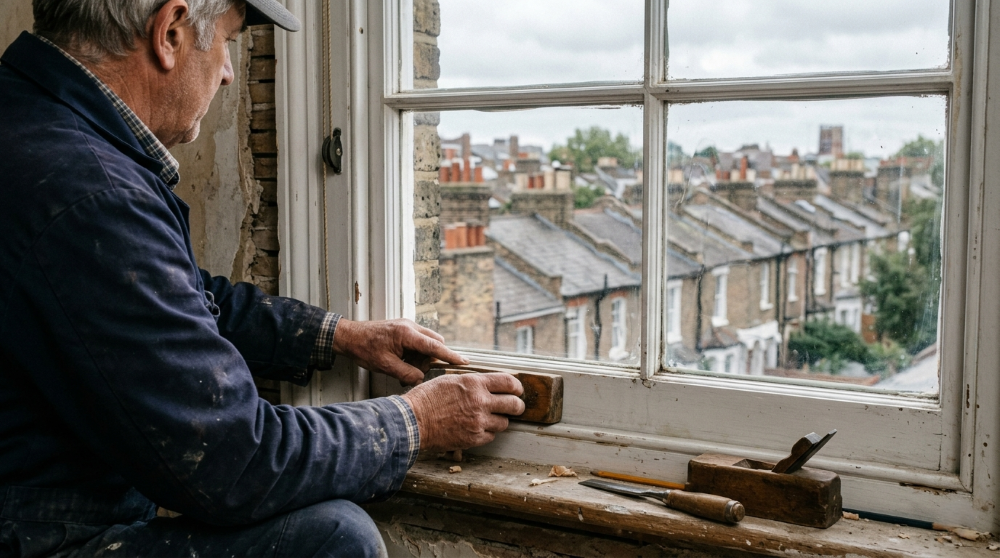
There is no shortage of handymen in London. Type your postcode into any directory and you'll get pages of them, plus the leaflets through the door, the cards in the corner shop window and the firms that paid to sit at the top of your search. The supply is the easy part.
The catch is that "handyman" is not a protected title. There's no licence, no exam and no register you legally have to join, so the listings mix genuinely skilled tradespeople with people who bought a drill last month. That puts the vetting on you. This guide covers what a London handyman actually does, what they can't legally touch, the realistic places to find one, and the short list of checks that separate a safe hire from an expensive mistake.
What a London Handyman Actually Does
A handyman is a generalist. They handle the pile of small jobs that are too minor or too varied to be worth a specialist trade's call-out, and the bread and butter is much the same across the capital:
- Mounting and fixing: TVs on the wall, shelves, mirrors, pictures, curtain poles and blinds.
- Flat-pack and furniture: assembling wardrobes, beds and units, often the IKEA delivery that's still in its boxes.
- Doors and windows: easing a sticking door, fitting handles and locks, adjusting hinges, draught-proofing.
- Minor plumbing: a dripping tap, a new toilet seat, resealing a bath or shower with fresh silicone.
- Patch-up decorating: filling cracks, touching up paint, small areas of tiling.
- Light carpentry and odd jobs: boxing in pipes, fitting a cat flap, putting up a coat rail, the long list that's been building up.
The single best use of a London handyman is exactly that last one - a list. Because the call-out and the first hour carry a premium in the capital, one visit covering five jobs is far better value than five separate visits. Our guide to handyman costs in London goes into the rates and the first-hour loading in detail.
The Jobs They Can't Legally Take On
This is where "anyone can be a handyman" stops. Some work is restricted by law regardless of how confident the person sounds, and getting it wrong can be dangerous and expensive. A general handyman should not be doing:
- Gas work of any kind - boilers, hobs, gas fires. By law this must be done by an engineer on the Gas Safe Register. No exceptions.
- Most fixed electrical work - new circuits, consumer units, and any notifiable work in kitchens and bathrooms falls under Part P of the Building Regulations and needs a registered electrician. Swapping a like-for-like socket or light fitting is a grey area many handymen will do, but anything beyond that should go to a professional.
- Structural changes - removing or altering load-bearing walls needs the right design and usually building control sign-off.
- Anything involving asbestos, common in London homes built or refurbished before 2000. Disturbing it is a job for a licensed specialist, not a handyman with a Stanley knife.
A good handyman knows where this line sits and will tell you when a job needs a registered trade rather than have a go. That honesty is itself a sign you've found a decent one. For the full picture, see our guide to what a handyman can legally do in the UK.
Where to Find One in London
No single source is best. Each has a trade-off, and the strongest approach is to cross-check a name across two or three of them before you commit.
Word of mouth
A neighbour's recommendation is usually the best lead, because it comes with a real track record on a job you can go and look at. In a block of flats or a terrace, ask who others have used.
Review directories
Checkatrade, MyBuilder, Rated People and TrustATrader let you compare local reviews and shortlist. Read the recent reviews, not just the star average.
TrustMark
TrustMark is the only government-endorsed quality scheme for work in the home. A registered business has been vetted against standards and gives you access to dispute resolution if things go wrong.
Local directories
A directory like this one lets you search by your area and contact handymen directly. It's free and quick - just remember the listing isn't a vetting badge, so the checks below still apply.
One thing to be clear about: a listing on any directory, including this one, is not a guarantee of quality. We don't vet the businesses listed - see how this site works. A directory helps you find candidates and contact them fast; the vetting is still your job, and the next section is the part that matters most.
How to Tell a Good One From the Rest
Because nobody licenses handymen, the checks below are the closest thing London has to a safety net - and they take a few minutes, not hours. The transient, hard-to-trace operator is the real risk in a big city, so the whole point is to confirm you're dealing with a real, accountable business before any money changes hands.
Do check for these
- Public liability insurance, with a current certificate you can actually see
- A traceable identity: full business name, a landline or consistent mobile, and an address
- Recent, specific reviews - and ideally one or two references you can call
- A clear written quote stating what's included, VAT, and how they charge
- A willingness to say "that's a job for a registered electrician/gas engineer"
Walk away from these
- Cash only, no receipt, and a nudge to keep it quiet
- A demand for a large deposit up front before any work
- No written quote, or a price that keeps shifting
- No verifiable address, reviews or insurance - just a mobile number
- High-pressure "decide today" tactics or a vague scope of work
Public liability insurance deserves a special mention in London because so many people live in flats. If a handyman drills into the wrong pipe or floods the flat below, that cover is what stands between you and a bill that could run into thousands. It isn't a legal requirement for them to have it, which is precisely why you should prefer one who does.
What to Expect: Quote, Visit and the Job
Once you've shortlisted someone, the process is fairly predictable. Knowing the normal shape of it makes the odd ones easier to spot.
- The quote. For a clear, small job many handymen will quote a fixed price over the phone or by message. For a longer or vaguer list, expect them to want photos or a quick visit first. A quote is a firm price; an estimate is a best guess that can change - know which you've been given.
- Booking and timing. Good handymen in London book up, so don't expect same-day unless it's an emergency (which costs more). Agree a date and a rough arrival window.
- Materials. Labour and materials are usually separate. Agree who's buying what - a TV bracket, silicone, a new lock - and whether there's a small mark-up for them sourcing it.
- On the day. A professional turns up with their own tools, protects floors and surfaces, and clears up after. Expect them to flag anything that turns out bigger than quoted before pressing on, not after.
- Paying. Pay on completion once you've checked the work, by a method that leaves a record. Get a receipt.
London Quirks: Flats, Access and Old Houses
London throws up a few things that shape the job in ways they wouldn't in a detached house with a driveway. Worth thinking about before you book.
Flats and leaseholds
If you're a leaseholder, some work needs the freeholder's or managing agent's permission, and communal areas aren't yours to alter. Check your lease before booking anything beyond minor repairs inside your own flat.
Access and parking
No driveway, permit-only streets, the Congestion Charge and ULEZ all eat into a tradesperson's day. Tell them the parking situation up front - some pass these costs on, and a surprise on the day helps nobody.
Period properties
London's Victorian and Edwardian stock comes with lath-and-plaster walls, sash windows and old pipework. Fixings and repairs can be fiddlier than in a modern build, so a handyman used to older homes is worth seeking out.
Waste and rubbish
If they're taking away old units or rubble, anyone transporting waste for business should be a registered waste carrier. Fly-tipped waste traced back to you can land you with a fine, so it's fair to ask.
Your Rights If Something Goes Wrong
You're better protected than many people realise, even when you've hired through an informal route. Under the Consumer Rights Act 2015, any contract for a service includes a term that the work will be carried out with reasonable care and skill - measured against the standard normally expected in that trade. If the work falls short, the handyman is in breach, whatever the final result looks like, and they can't sign that responsibility away in their terms.
In practice that means if a job is done badly, you can ask them to put it right, usually at no extra cost, before you start talking about a refund. To give yourself the best footing:
- Keep the written quote, your messages and any receipts.
- Raise the problem in writing, clearly and calmly, and give them a chance to fix it.
- If it isn't resolved, Citizens Advice can talk you through your options, and the small claims court is there for amounts you can't settle.
This is also the strongest argument against the cash-in-hand, no-paperwork job. The cheaper price looks good until something goes wrong and you've got nothing in writing to stand on.
Frequently Asked Questions
Do you need a licence to be a handyman in London?
No. There's no handyman licence anywhere in the UK, London included, and anyone can offer general handyman services without a qualification. That's exactly why vetting matters: you have to do the checking that no licensing body does for you. Look for public liability insurance, a traceable name and address, and real reviews. Certain jobs are different - gas work and most fixed electrical work can only be done legally by a registered professional.
What's the best way to find a reliable handyman in London?
There's no single best source. A personal recommendation from a neighbour is usually the strongest lead, because it comes with a track record. Beyond that, online directories such as Checkatrade, MyBuilder, Rated People and TrustATrader let you compare reviews and shortlist locals, and a TrustMark-registered business has been vetted under the government-endorsed scheme. Whatever the source, do your own checks before booking - insurance, references and a written quote.
What services does a London handyman provide?
General repairs and small home improvements: mounting TVs and shelves, assembling flat-pack furniture, fixing doors, hanging pictures and curtains, minor plumbing such as a leaking tap, resealing baths, patching and painting, and small bits of carpentry. Many also take on odd-job lists and basic maintenance. They don't carry out gas work or most fixed electrical work, which need a registered professional.
Should a London handyman have insurance?
It's not a legal requirement, but you should strongly prefer one who carries public liability insurance. It covers damage to your property or injury caused by their work - especially relevant in a flat, where a mistake can affect the neighbour below. Ask to see the certificate and check it's current. A handyman who can produce one without fuss is usually one who takes the job seriously.
What are my rights if a London handyman does a bad job?
Under the Consumer Rights Act 2015, any service must be carried out with reasonable care and skill. If the work falls short of the standard expected in the trade, the handyman is in breach and you can ask them to put it right, usually at no extra cost. Keep your written quote, messages and receipts, raise the problem in writing, and if it isn't resolved you can escalate through Citizens Advice or the small claims court.
This guide is general information for London households, not legal advice. Insurance, licensing and your specific circumstances vary, so confirm anything important with the tradesperson and the relevant body before you commit. See our full disclaimer.
Find a Handyman in London
From a single fix to a whole list of jobs, a local handyman can handle it. The UK Handyman Directory lists handymen across London and the rest of the country with direct contact details. Search by your area, view listings, and reach out directly - free, fast, and no sign-up required.
Find a Handyman Near You