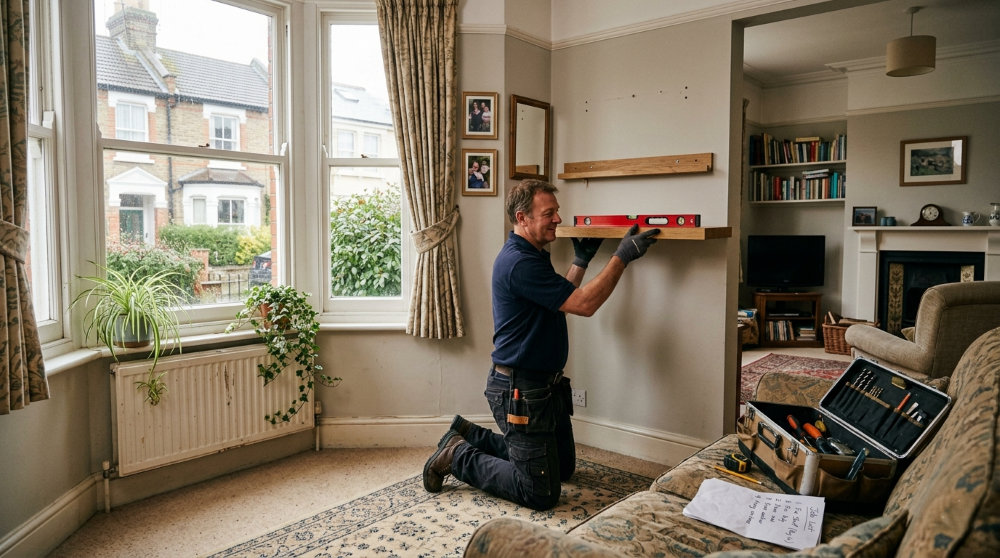
A dripping tap, a wobbly shelf and a door that won't close - you don't need a plumber, a carpenter and a joiner for that. You need one handyman for an afternoon. But a new boiler, a full rewire or a wall coming out? That's not a handyman job, no matter how cheap the quote, and treating it like one can cost you far more than you saved.
The handyman-or-specialist question isn't really about who's better. It's about matching the job to the right person - and most of the time the answer is more clear-cut than people think. This guide gives you a simple way to decide, where the legal hard lines sit, and roughly what each option costs.
The Short Answer
Use a handyman for a list of small, varied, unregulated jobs - it's cheaper and far more convenient. Use a specialist when the work is legally restricted (gas, notifiable electrics, structural, glazing), when it's one big skilled job rather than several small ones, or when getting it wrong is dangerous or expensive. The mistake to avoid is asking either one to do the other's job.
What Each One Actually Is
A handyman is a generalist. They're good across a wide range of everyday home tasks - putting things up, fixing things, sealing, filling, assembling, basic repairs - and the value is in that breadth. You can hand them a list of six unrelated jobs and they'll work through the lot in one visit.
A specialist is a single trade with depth: a plumber, an electrician, a Gas Safe engineer, a roofer, a plasterer. They've trained for one discipline, often hold a qualification or registration in it, and they'll be faster and better than a generalist on the harder work within that trade. You wouldn't call one out to hang a picture, and you wouldn't ask a generalist to rewire your house.
There's overlap in the middle, and that's where the confusion lives. Plenty of handymen can do basic plumbing and minor electrical jobs perfectly well. The skill question and the legal question are separate things - and it's the legal one that draws the hardest line.
The Three Questions That Decide It
Before you book anyone, run the job through these three tests in order. The first one that gives you a "specialist" answer settles it.
- 1. Is it legally restricted? Some work can only be done (or signed off) by a registered professional - gas, notifiable electrical work, structural changes, replacement windows. If your job is on that list, the decision is made for you: it needs the specialist, regardless of cost or how confident anyone sounds.
- 2. Is it one big skilled job, or a list of small ones? A single, demanding task in one trade - a new bathroom suite, a plastered ceiling, a run of fitted units - usually belongs with a specialist. A mixed bag of small, quick jobs is exactly what a handyman is for.
- 3. What happens if it goes wrong? A wonky shelf is a minor annoyance. A botched gas connection or a leak hidden inside a wall is not. The higher the cost of failure - to your safety, your home or your insurance - the stronger the case for the qualified trade.
Most household jobs sail through all three and land squarely on "handyman". The ones that don't tend to be obvious once you ask the questions.
The Jobs Only a Specialist Can Legally Do
This is the part where there's no judgement call. UK law regulates certain work, and a general handyman cannot legally carry it out unless they personally hold the right registration. Hiring an unregistered person for these jobs can break the law, void your home insurance and cause problems when you sell.
Gas Work
Boilers, gas fires, hobs and gas pipework. By law this must be done by someone on the register - it's a criminal offence to work on gas without it, carrying an unlimited fine and up to six months' imprisonment, per the Gas Safe Register.
Gas Safe registered engineerNotifiable Electrics
New circuits, a consumer unit (fuse board) change, or work in a room with a bath or shower. Must meet Part P in England & Wales and be certified or notified to building control.
Registered electricianStructural Work
Removing or altering load-bearing walls, chimney breasts or beams. Needs a structural engineer's calculations and Building Regulations approval.
Engineer + Building ControlWindows & Doors
Replacing windows and external doors must meet Building Regulations - proven via a FENSA (or CERTASS) registered installer or a building control certificate.
FENSA / CERTASS installerThis isn't the full list - unvented hot water cylinders and licensable asbestos belong here too. For the complete picture of where the line sits, see our guide to what a handyman can legally do in the UK. The point for this decision is simple: if your job is on this list, stop weighing it up and book the specialist.
What Each One Costs
Cost is usually the reason people hesitate, so it's worth being honest about the gap. A handyman is the cheaper hire for the work they can do - but only for that work. The figures below are typical UK price-guide ranges; your own quote depends on the job, the region and who you ask.
| Handyman | Specialist trade (e.g. plumber / electrician) | |
|---|---|---|
| Typical hourly rate | £20-£30 (~£50 London) | ~£45-£60 (higher in London) |
| Call-out / minimum | £40-£60, often the first hour | ~£60-£120; emergencies far higher |
| Day rate | ~£150-£250 outside London | ~£350-£400 |
| Best for | A list of small, varied jobs | One large or regulated job |
Handyman figures come from Checkatrade and our own handyman cost guide; the specialist ranges reflect 2025-26 price guides from Checkatrade and MyJobQuote for plumbers and electricians.
The trap is reading that table and concluding the handyman is always cheaper. They're cheaper per hour, but a specialist who does a skilled job once, properly, can be cheaper than a generalist who takes twice as long or has to call someone in to fix it afterwards. Price the job, not the hourly rate.
When the Handyman Is the Better Call
For a huge slice of household maintenance, the handyman wins on both cost and convenience. This is their home ground:
✔ Call a handyman for
- A list of small, unrelated jobs in one visit
- Shelves, pictures, mirrors, curtain poles, TV brackets
- Flat-pack and furniture assembly
- Sealing a bath or shower, minor tiling and grouting
- Changing a tap, washer or waste trap
- Filling cracks, touch-up painting and decorating
- Doors that stick, loose handles, draught-proofing
- Gutter clearing and minor outdoor maintenance
✘ Don't call a specialist just for these
- A single five-minute job (you'll still pay their minimum)
- Hanging one picture or shelf
- Assembling a wardrobe
- Re-sealing around the bath
- Putting up a curtain rail
- General "bits and bobs" odd jobs
The single biggest saving here is bundling. Most handymen charge a minimum or call-out fee, so the smart move is to save up the small jobs and book them into one visit - you pay the call-out once and fill the time you're already paying for.
When to Pay for the Specialist
Beyond the legally restricted work, there are jobs where a specialist is simply the right tool even though a handyman could attempt them. Reach for the trade when:
- It's one big job in a single discipline. A full bathroom refit, a re-plastered room, a complete repaint of the house, a fitted kitchen - depth and speed matter more than breadth.
- A warranty or certificate is involved. New boilers, electrical installation certificates and FENSA paperwork need the registered professional, and you'll want that documentation when you sell.
- Diagnosis is the hard part. An intermittent leak, a tripping circuit, a damp problem - knowing why it's happening is a specialist skill, and guessing is expensive.
- The downside is serious. Anything involving gas, water inside walls, electrics, height or the structure of the building. The cost of failure is too high to save a few pounds an hour.
A fair sign of a good handyman: they tell you when a job is beyond what they should take on, and point you to the right trade. Someone happy to "have a go" at your boiler or fuse board is a red flag, not a bargain.
The Grey Area: Multi-Skilled Handymen
Plenty of tradespeople don't fit neatly into one box. A handyman might also be a qualified electrician, or hold Gas Safe registration, or have spent twenty years as a joiner before going general. In that case they can legally and competently do the specialist work too - but only within whatever they're actually registered or qualified for.
So the question to ask isn't "are you qualified?" in the abstract. It's specific: are you Gas Safe registered for this boiler? Are you registered to certify this electrical work under Part P? A genuine professional won't mind the question, and for regulated work you can verify the answer yourself - Gas Safe registration on the Gas Safe Register, and electricians through a scheme such as NICEIC or NAPIT.
The reverse is true too. A specialist trade will often happily do small general jobs while they're with you - ask the plumber to also look at the dripping outside tap, or the electrician to swap a couple of light fittings. If you're paying their minimum anyway, you may as well use the time.
Handyman vs Plumber, Handyman vs Electrician
Two comparisons come up more than any other, because plumbing and electrics are exactly where the overlap and the legal line both sit. Here is how each one splits.
Handyman vs Plumber
A handyman covers the general plumbing that needs no registration: changing a tap or washer, fitting a new sink, toilet or waste trap, plumbing in a washing machine, and sealing around a bath. A plumber earns their higher rate on the harder water jobs - a full bathroom suite, a hidden leak that has to be traced, re-routing pipework, or a power-shower install - and on anything where diagnosis is the difficult part. The cost gap is real: our handyman cost guide puts a handyman near £20-£30 an hour against a plumber's typical £45-£60 (see Checkatrade's plumber costs). The one hard line: anything on the gas side of a boiler is never a handyman job.
Handyman vs Electrician
Here the law does most of the deciding. A handyman can swap a like-for-like socket, switch or light fitting on an existing circuit, but a new circuit, a consumer-unit (fuse board) change, or any work in a room with a bath or shower is notifiable under Part P and must be done or certified by a registered electrician. For a rewire, an EICR or an installation certificate you need the electrician - not because a handyman lacks the skill, but because only the registered trade can legally sign it off.
Quick Reference: Who to Call
A rough guide to common jobs and who they usually suit. As always, regulated work is a legal requirement, not a preference.
| The job | Usually best for |
|---|---|
| A list of small odd jobs in one visit | Handyman |
| Shelves, pictures, flat-pack, TV bracket | Handyman |
| Changing a tap, washer or waste trap | Handyman |
| Sealing a bath, minor tiling, filling, touch-up painting | Handyman |
| Boiler, gas fire, gas hob or gas pipework | Gas Safe engineer |
| New circuit, fuse board, or bathroom electrics | Registered electrician |
| Full bathroom or kitchen refit | Specialist / fitter |
| Re-plastering a room, full house repaint | Plasterer / decorator |
| Removing a wall, structural changes | Engineer + builder |
| Replacing windows or external doors | FENSA / CERTASS installer |
Frequently Asked Questions
Is a handyman cheaper than a plumber or electrician?
Usually, yes. Price guides put a general handyman at roughly £20 to £30 an hour, while plumbers and electricians commonly charge £40 or more per hour and often have a higher call-out fee. For small, unregulated jobs a handyman is normally the cheaper option. But you're paying for a generalist, not a specialist's depth, so the saving only holds for work that genuinely doesn't need a trade qualification.
Can a handyman do the same work as a specialist?
For a lot of everyday jobs, yes - changing a tap washer, fitting a shelf, sealing a bath, patching plaster or assembling furniture are well within a competent handyman's range. What they can't do is regulated work: gas appliances and pipework must be done by a Gas Safe registered engineer, and notifiable electrical work must meet Part P. Those are legal lines, not skill ones.
When should I use a specialist instead of a handyman?
Use a specialist when the work is legally restricted (gas, notifiable electrics, structural, glazing), when it's one large skilled job rather than a list of small ones, or when getting it wrong is expensive or dangerous - a full rewire, a new boiler, moving a wall. For a pile of small odd jobs, a handyman is usually the better and cheaper choice.
Can a handyman do plumbing work?
A handyman can do basic plumbing such as changing a tap, replacing a washer, fitting a waste trap or silicone-sealing a bath. Anything on the gas side of a boiler needs a Gas Safe engineer, and bigger work - moving pipework, a new bathroom suite, or fixing a persistent leak inside a wall - is often better given to a plumber. If in doubt, ask the handyman directly what they will and won't take on.
Is it worth getting a handyman for just one small job?
It can be, but most handymen apply a minimum charge or call-out fee, so one tiny job costs roughly the same as several. If you only have a single quick task, you'll get far better value by saving it up with other small jobs and booking them all into one visit. For a single large or regulated job, the right specialist is usually the better call.
Can one person be both a handyman and a qualified specialist?
Yes, and many are. Plenty of handymen hold a specific trade qualification or registration - for example, a handyman who is also Gas Safe registered or a qualified electrician. In that case they can legally do the regulated work too, but only within whatever they're actually registered for. Always check the specific registration for the specific job, not just that they're "qualified" in general.
Disclaimer: This guide is general information for UK households and is not legal advice. Prices are typical ranges from third-party guides and vary by job and region; regulations change. Always confirm requirements and registration for your specific job before work begins. See our full disclaimer for more.
Need a Handyman for Your List?
If your job lands on the handyman side of the line, find someone local. The UK Handyman Directory lists handymen across the country with direct contact details - search your area and reach out directly. Free, fast, and no sign-up required.
Find a Handyman Near You