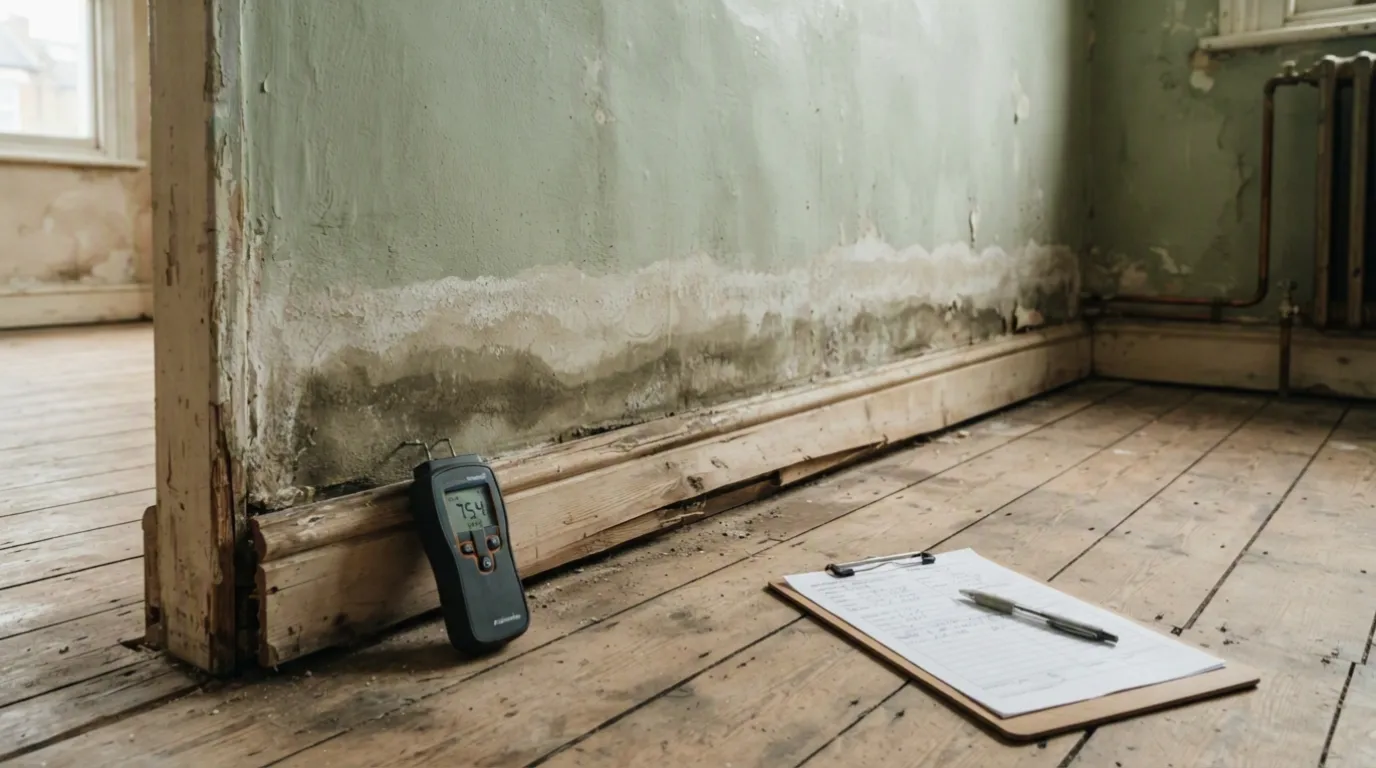
Here is the single most useful fact about damp in British homes, and it saves people thousands. When surveyors go out to inspect reported "damp", the vast majority of what they find is condensation - not water coming through the wall, not water rising up from the ground, just warm moist indoor air meeting cold surfaces and turning back into water. The English Housing Survey for 2024 to 2025 found that of the homes with a damp problem, severe condensation was the most common form by some way, penetrating damp was next, and rising damp was the rarest of the three.
That order matters, because the treatments run in the opposite direction of cost. Condensation is usually the cheapest to beat and the one you can mostly fix yourself. Rising damp is the one that gets a salesman to your door quoting four figures. Get the diagnosis right first and you spend the right money. Get it wrong and you can pump chemicals into a wall that was never rising-damp in the first place.
First, Which Damp Have You Actually Got?
Before you buy a dehumidifier or ring a damp company, spend two minutes reading the wall. The three types show up in different places, at different times of year, in different ways. This one table settles most home arguments about it.
| Type | Where it shows | The tell-tale sign | When |
|---|---|---|---|
| Condensation | Cold spots - windows, outside-wall corners, behind wardrobes on an external wall | Water droplets on glass; spotty black mould | Worst in winter |
| Penetrating damp | One patch, often mid or high on a wall or a ceiling | Gets darker after rain; a defect outside (gutter, render, roof) | Any time it rains |
| Rising damp | Low down, up to about a metre from the floor | A tide mark and a band of white salts along the top edge | All year round |
The clues that separate them are height, timing and mould. Condensation is high-and-cold and comes with mould. Penetrating damp follows the weather - dry spell, dry patch; heavy rain, dark patch. Rising damp is low, capped by a tide mark, and never dries out because its source is the ground, not the seasons. If what you are looking at is high up a wall with black mould around a cold window, you almost certainly have condensation, and the next two sections are the ones for you.
Condensation: The Common One, and the Fixable One
The science is simpler than it sounds. Warm air holds a lot of water vapour; cold air holds much less. When the warm, damp air inside your home touches a surface colder than its "dew point" - a single-glazed window, the cold corner of an outside wall, the tiles behind the loo - it can no longer hold that moisture, and it dumps it out as liquid water on the surface. That is the runny window. That is the damp patch behind the sofa.
The reason it has got worse in a lot of homes is a bit of a paradox: we have sealed our houses up. Draught-proofing, double glazing, loft insulation and blocked-off chimneys all keep heat in, which is what we want, but they also trap moisture that older, draughtier homes used to leak away without anyone noticing. And we make a surprising amount of moisture. A household going about a normal day - showering, cooking, boiling the kettle, breathing overnight, and above all drying washing on the radiators - puts a lot of water into the air. The Energy Saving Trust reckons a typical household produces up to around 100 litres of moisture a week. All of that has to go somewhere, and if it cannot get out, it lands on your coldest surfaces.
How to Stop Condensation
Two levers control condensation: get the moisture out, and keep surfaces warm enough that the moisture stays airborne long enough to leave. You need both. Heat a damp room without ventilating it and you have warm damp air; ventilate a freezing room and the walls still hit dew point. Do them together and the problem fades.
The free and near-free habits are where to start, and for a lot of homes they are enough on their own:
- Dry washing outside or in a vented tumble dryer, never draped over the radiators. Indoor drying is the single biggest avoidable moisture source in most homes.
- Lids on pans when cooking, and run the extractor fan or crack a window while you do.
- Shut the bathroom and kitchen door while showering or cooking so the steam stays put, and run the fan for a while afterwards.
- Open the trickle vents - the little slotted flaps on top of modern window frames. People tape them shut against draughts and then wonder why the glass streams.
- Wipe the windows down each morning in winter and wring the cloth into the sink, and leave a gap behind wardrobes and sofas that sit against outside walls.
On the heating side, a low, steady background warmth beats short hot blasts. Guidance from bodies including the World Health Organization and the Energy Saving Trust points to keeping living areas somewhere around 18 to 21 degrees, with 18 as a sensible floor, especially where there are children, older people or anyone with a lung condition. Aim to keep indoor humidity in a comfortable band - roughly 40 to 60 per cent is the range usually recommended - and a cheap hygrometer from a DIY shop tells you where you stand.
When habits are not enough, the fixes cost money, and here is roughly what they run to in the UK:
| Fix | Typical UK cost | Best for |
|---|---|---|
| Better habits (drying, lids, wiping, vents) | Free | Almost every home - do this first |
| A decent dehumidifier to buy | Around £150-£300 | A persistently damp room or drying washing indoors |
| Extractor fan, supply and fit | Around £200 to replace, ~£300 for a new one | Steamy bathrooms and kitchens with no fan or a weak one |
| Positive input ventilation (PIV) unit, installed | Around £900 | Whole-house condensation and mould that keeps returning |
A word on extractor fans, because they are the workhorse here. A recirculating cooker hood that just blows the steam back into the room does nothing for condensation - the fan has to vent to outside. The Building Regulations (Approved Document F) set minimum extraction rates for new installs of 15 litres a second for a bathroom and 30 or 60 litres a second for a kitchen, and a quiet fan with a humidistat and timer that runs on automatically is worth the small extra over a basic one. Fitting or upgrading an extractor fan and adding trickle vents is exactly the sort of half-day job a local handyman handles, and it is often the fix that finally stops the mould coming back.
The pricier option, a positive input ventilation unit, sits in the loft and gently pushes filtered fresh air down into the house, diluting the moist stale air and driving it out through the gaps. For a home with condensation in every room it can be the thing that turns it around, and at roughly £900 installed it is a lot cheaper than chasing damp with the wrong treatment for years.
Black Mould on Walls: How to Clean It Safely
The black, spotty mould that grows around cold windows and in wall corners is not a stain, it is a living thing, and it feeds on the moisture that condensation leaves behind. It also matters for your health, not just your paintwork. Government guidance drawn together with the UK Health Security Agency is blunt that damp and mould can harm health, causing or worsening coughing, wheezing and breathing problems, with children, older people and anyone with a lung condition most at risk.
The reason that warning is now taken so seriously traces to one case. Awaab Ishak, a two-year-old boy in Rochdale, died in December 2020 from a respiratory condition caused by prolonged exposure to mould in his family's flat, despite his parents repeatedly reporting it. The coroner's inquest concluded in November 2022, and the law that followed - Awaab's Law - is covered in the renting section below. The short version: black mould is worth clearing properly and quickly, and worth fixing at the source.
For a small patch, roughly under a square metre, this is a job you can do yourself. The commonly cited guidance is to clean small areas but call someone for anything large, recurring or linked to a leak. To do it safely:
- Protect yourself. Wear rubber gloves, eye protection and a proper close-fitting mask - a flimsy paper one will not stop the spores.
- Use a fungicidal wash that carries an HSE approval number, and follow the instructions on it. This is more reliable than a splash of bleach.
- Never brush, sweep or vacuum dry mould. Disturbing it dry launches a cloud of spores around the room. Wipe it, don't scrub it dry.
- Let the wall dry, then finish with anti-mould paint to slow a return - but treat that as a bonus, not the cure.
- Deal with the moisture. If you clean the mould but leave the condensation feeding it, it comes straight back. The cleaning is the symptom; the ventilation is the fix.
If the mould covers a big area, keeps returning after you have cleaned it and improved ventilation, or is tied to actual water ingress or contaminated water, that is the point to stop scrubbing and get a professional to find and fix the underlying cause.
Penetrating Damp: When the Wall Lets Water In
Penetrating damp is real water getting through the fabric of the building from outside, and unlike condensation it is usually a defect you can point at. The tell is timing: the patch darkens and spreads after heavy rain, then dries back a little in a dry spell. The usual suspects are all things that should be shedding water away from the wall and have stopped doing it:
- Blocked or leaking gutters and downpipes spilling water down the wall
- Cracked or blown render, or failed pointing letting rain soak into the brickwork
- Slipped roof tiles, tired flashing around a chimney, or a porch or bay roof that has given up
- Perished seals around windows, or an outside ground or path level built up above the damp-proof course
The good news is that fixing the cause is often straightforward and not especially dear. Clearing and repairing guttering typically runs somewhere around £150 to £500 depending on the work, and repointing brickwork is priced at roughly £40 to £60 a square metre. Gutter clearing, minor repointing and resealing are within a handyman's scope; anything up on the roof or the flashing is a roofer's job. Fix the outside defect and let the wall dry out, and the damp patch inside stops spreading - no chemicals in the wall required.
Rising Damp: Real, but Rarer Than You're Told
Rising damp is genuine ground moisture soaking up through the base of a wall by capillary action, in the way a tissue wicks up spilt tea, where the damp-proof course - the waterproof barrier built into the wall near ground level - is missing, has failed, or has been bridged by a raised path or render. The classic signs are damp up to about a metre high, a distinct tide mark, and a band of white, powdery salts drawn out of the ground along the top of the damp zone. It is there whatever the weather.
Here is the part the damp-proofing adverts leave out: rising damp is the least common of the three problems, and it is heavily over-diagnosed. Independent surveyors and building specialists have argued for years that a great deal of what gets sold as rising damp is really condensation, a leaking gutter, a bridged damp-proof course or a plumbing leak - and that the handheld "moisture meters" used to justify a treatment are easily misread. There is an obvious conflict of interest when the firm that diagnoses the problem is also the firm that sells you the cure. A free damp survey from a company that fits chemical damp-proof courses is not the same as an impartial diagnosis.
So if someone tells you that you need a chemical damp-proof course, pause and get an independent damp survey first - typically £150 to £400 - from a RICS surveyor or a Property Care Association qualified surveyor who does not sell the treatment. That report gives you an honest diagnosis and something to hand to competing contractors for quotes. Where genuine rising damp is confirmed, a new chemical damp-proof course is priced by the metre: the injection alone is roughly £70 to £120 a metre (some guides quote less), and with the salt-damaged plaster hacked off and replaced it is closer to £150 to £250 a metre. A whole job on an average house often comes in somewhere around £1,200 to £3,500 once replastering and redecorating are added. That is real money to spend on the rarest of the three problems, which is exactly why the diagnosis has to come before the quote.
Renting? Whose Job Is Damp and Mould?
If you rent, damp and mould are not simply your fault for "not opening a window", and the law has moved firmly in tenants' favour on this. The Homes (Fitness for Human Habitation) Act 2018 requires a rented home to be fit to live in at the start of and throughout the tenancy, and damp or mould serious enough to make it unfit is the landlord's responsibility to put right. Separately, Section 11 of the Landlord and Tenant Act 1985 makes the landlord keep the structure, exterior, gutters and heating in repair - so damp caused by a leak, a broken gutter or a faulty boiler is squarely on them.
The tenant's side is reasonable, not impossible: ventilate, heat the home sensibly, wipe up condensation and, above all, report problems in writing and keep a record. You are not required to stop cooking, showering or drying clothes. As Shelter sets out, where condensation keeps returning despite reasonable effort, the landlord has to investigate the real cause - poor ventilation or insulation - rather than wave it away as lifestyle.
For social housing tenants there is now a hard legal deadline. Awaab's Law, in force from October 2025, requires social landlords to investigate reported damp and mould within 10 working days, give the tenant a written summary within 3 working days of that, and make the home safe within 5 working days of the investigation, with a 24-hour deadline for emergencies. The Renters' Rights Act 2025 gives the government power to extend Awaab's Law to private landlords too, though the timing for the private rented sector is still to be confirmed. If a landlord will not act, a private tenant can ask the council's environmental health team to inspect the hazard; a social tenant can escalate to the Housing Ombudsman.
When to Call a Professional, and Who
Most everyday condensation and mould is genuinely within reach of a homeowner plus, at most, a handyman for the practical bits. The line to hire someone is about diagnosis and access, not difficulty. Call a professional when the cause is up on the roof, when the damp is unclear or keeps beating you despite better ventilation, or when someone is trying to sell you a big-ticket chemical treatment and you want an impartial second opinion first. Rough UK figures to budget against:
| Job | Typical UK cost | Who |
|---|---|---|
| Cleaning a small mould patch | Free (DIY) | You, with a fungicidal wash |
| Fitting or upgrading an extractor fan | Around £200-£300 | Handyman or electrician |
| Clearing and repairing gutters | Around £150-£500 | Handyman or roofer |
| Repointing brickwork | Around £40-£60 per m² | Handyman or builder |
| Independent damp survey | Around £150-£400 | RICS or PCA surveyor (who doesn't sell the cure) |
| Chemical damp-proof course + replaster | ~£150-£250 per metre | Damp specialist |
For the practical work - a new extractor fan, cleared gutters, a bit of repointing, sealing round a window - a local handyman is usually the quicker and cheaper call than a specialist firm, and can often knock several of these jobs off in a single visit. Our guide to what a handyman can legally do shows where their scope ends, and the handyman cost guide breaks down hourly and day rates. Because so much condensation traces back to a cold home, our guide to common radiator and heating fixes is a useful companion - a house that heats evenly is a house with fewer cold surfaces for moisture to land on.
The one rule that saves the most money: diagnose before you treat. Condensation is common and cheap to beat, penetrating damp is a fixable outside defect, and rising damp is rare and expensive - so never let anyone sell you the rising-damp cure until an independent survey has ruled the cheaper explanations out. Most "damp" is the £0 to £300 kind, not the £3,000 kind.
Frequently Asked Questions
How do I tell the difference between condensation and damp?
Look at where it shows and when. Condensation forms on cold surfaces - windows, the corners of outside walls, behind furniture pushed against an external wall - as water droplets and spotty black mould, and it is worst in winter when the heating is fighting the cold. Penetrating damp is a patch on the wall that gets darker after rain and is tied to an outside fault like a leaking gutter or cracked render. Rising damp sits low down, up to about a metre from the floor, with a tide mark and a band of salts, and it is there all year round. In UK homes condensation is by far the most common of the three.
How do I get rid of black mould on walls?
For a small patch, roughly under a square metre, you can treat it yourself. Wear rubber gloves, eye protection and a proper close-fitting mask, then wipe the mould off with a fungicidal wash that carries an HSE approval number, following the product instructions. Do not brush, sweep or vacuum dry mould, because that throws spores into the air. Once the wall is dry, a coat of anti-mould paint helps stop it coming back. The important part is fixing the condensation that is feeding it, otherwise it will simply return. If the mould covers a large area, keeps coming back, or is linked to a leak or sewage, get a professional in.
What temperature should I keep my house to stop condensation?
A gentle, steady background heat does far more against condensation than short blasts of high heat. Guidance from bodies including the World Health Organization and the Energy Saving Trust points to keeping living areas around 18 to 21 degrees, with 18 degrees treated as a sensible minimum, especially where children, older people or anyone with a lung condition live. Warm surfaces do not reach dew point as easily, so the moisture stays in the air where ventilation can carry it out rather than condensing on cold glass and walls. Heating is only half the answer though - you have to ventilate as well, or you just warm up damp air.
How much does it cost to fix rising damp?
A new chemical damp-proof course is usually priced by the metre. Injecting the cream or fluid alone runs roughly £70 to £120 a metre, though some guides quote less, and once you add hacking off the salt-damaged plaster and re-plastering it is closer to £150 to £250 a metre. A whole job on an average house often lands somewhere around £1,200 to £3,500 depending on size, area and how much replastering and redecorating follows. Before you pay for any of it, get an independent damp survey from someone who does not sell the treatment - genuine rising damp is the least common form of damp, and a lot of what gets diagnosed as rising damp turns out to be condensation or a fixable outside leak.
Is condensation damp the landlord's responsibility or the tenant's?
It is shared, and it is not simply the tenant's fault. Under the Homes (Fitness for Human Habitation) Act 2018 a rented home must be fit to live in throughout the tenancy, and damp and mould that make it unfit are the landlord's problem to put right. A tenant is expected to ventilate, heat the home reasonably and report issues promptly, but is not required to stop normal living such as cooking, showering or drying clothes. If condensation keeps coming back despite reasonable effort, the landlord has to look at the underlying cause, such as poor ventilation or insulation, rather than blame lifestyle. For social housing, Awaab's Law now sets legal deadlines for landlords to investigate and fix reported damp and mould.
Can a handyman fix damp, or do I need a specialist?
It depends which damp you have. Most condensation is beaten with ventilation and heat, and the practical jobs behind that - fitting or upgrading an extractor fan, adding trickle vents, clearing blocked gutters, minor repointing - are all within a competent handyman's scope. Penetrating damp caused by an outside defect is a handyman or roofer job once the cause is found. Genuine rising damp and any unclear, persistent case is where you want an independent damp surveyor to diagnose it first, so you are not sold a chemical damp-proof course you may not need. So: a handyman fixes the causes of everyday condensation and simple penetrating damp; a specialist diagnoses the stubborn cases.
Prices and figures in this guide are typical UK ranges gathered from published 2026 trade, government and manufacturer sources and are for general guidance only. Your own costs depend on your home, your area and who you hire. This is general information, not damp, building or health advice - if in doubt, get a qualified surveyor or tradesperson to look at it, and speak to your GP about any health concern. See our disclaimer for more.
Damp or Mould to Sort? Find a Local Handyman
Whether it is a new extractor fan, cleared gutters, some repointing or a mould clean-up, a local tradesperson can put the practical fixes in. The UK Handyman Directory lists handymen across the country with direct contact details - search your area, compare listings, and get in touch directly. Free, fast, and no sign-up needed.
Find a Handyman Near You