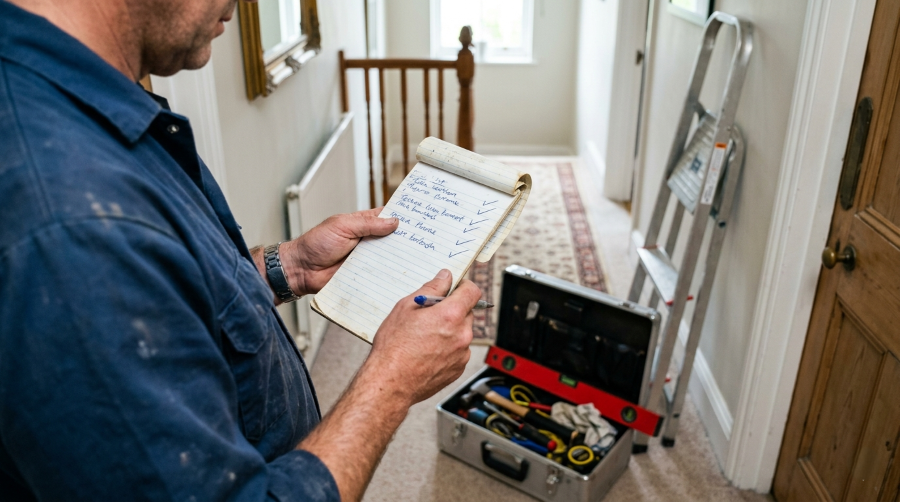
Every home builds up a backlog. A shelf that never went up, a door that catches on the carpet, a blown bulb in a fitting you can't reach, a bath seal gone black, a flat-pack wardrobe still in its box. None of it is big enough to call out a specialist - and that's exactly the gap a handyman fills.
A handyman, or handyperson, is a multi-skilled worker who takes on small repairs, maintenance and improvement jobs across a range of trades. The thing that defines them isn't one particular skill - it's breadth. Where a plumber goes deep on pipework and a sparky goes deep on wiring, a handyman covers a little of everything: a bit of carpentry, a bit of fixing, a bit of decorating, a bit of assembly, all in the same visit. This guide explains what that covers, where the legal limits sit, and how a handyman differs from the tradespeople they sometimes get confused with.
What a Handyman Is - and What They're Called
The meaning of "handyman" is simple: a generalist for small jobs. They're the practical all-rounder you bring in for the list of odd jobs that each take minutes to an hour, not the major project that needs a single trade for days.
You'll see the same role under a few different names, and they mean much the same thing - handyperson, handyworker, odd-job man, general handyman, or property maintenance operative. None of these is a protected or regulated job title in the UK. Handyman work isn't licensed, so there's no exam to pass or register to join before someone can call themselves one. That has two consequences worth holding on to: the label alone tells you nothing about how good someone is, and the quality genuinely varies - which is why reviews, insurance and a clear written quote matter more here than a job title ever could.
Most handymen pick up their range through years of hands-on experience rather than a formal apprenticeship in one trade. Plenty are former tradespeople - a retired joiner, an ex-builder - who've broadened out; others have simply built a wide practical skill set over time.
What Does a Handyman Do?
The honest answer is "an enormous variety", which is the whole point of hiring one. But the work clusters into a handful of recognisable groups. Here's the typical spread:
Repairs & fixing
Dripping taps, sticking or dropped doors, loose handles and hinges, running toilets, cracked tiles, filling and patching small holes.
Mounting & fitting
Wall-mounting TVs, hanging shelves, pictures and mirrors, putting up curtain poles and blinds, fitting coat hooks and brackets.
Assembly
Flat-pack wardrobes, beds, desks and units - one of the most-requested handyman jobs of all, and a classic Sunday-afternoon time sink.
Decorating & sealing
Touching up or painting a room, re-siliconing a bath or shower, regrouting tiles, basic plastering and making good.
Outdoor & garden
Clearing gutters, fitting or fixing a fence panel, jet-washing a patio, putting up a shed, small fence and gate repairs.
General maintenance
The ongoing upkeep landlords and offices need - swapping fittings, draught-proofing, small fixes that keep a property in good order.
What ties all of that together is the single visit. The real value of a handyman isn't any one job on the list - it's that one person works through the whole list in an afternoon, so you pay a single call-out instead of booking five separate trades. Saving up small jobs and handing over a written list is the way to get the most out of one. For a fuller, priced rundown of the common jobs and what they cost, see our guide to how much a handyman costs, and you can browse local handyman service guides for your city.
Handyman Services List: Common Jobs
If you prefer it as a plain checklist, here is the sort of handyman services list you will find on most tradespeople's profiles. No two handymen offer exactly the same spread, but this covers the bulk of it:
- Flat-pack and assembly - wardrobes, beds, desks, drawers and shelving units.
- Mounting and hanging - TVs, shelves, mirrors, pictures, curtain poles, blinds and coat hooks.
- Repairs - dripping taps, running toilets, sticking doors, loose hinges and handles, cracked tiles.
- Decorating and sealing - touch-up painting, re-siliconing baths and showers, regrouting, filling and making good.
- Doors, floors and carpentry - easing and rehanging doors, fitting skirting, small carpentry and laminate repairs.
- Outdoor jobs - gutter clearing, fence panel and gate fixes, patio washing, putting up a shed.
- General maintenance - draught-proofing, swapping fittings and the ongoing upkeep landlords and offices need.
The right question is never "do you do handyman work?" but "do you do this specific job?" - always confirm your particular tasks when you get in touch, since anything gas, notifiable electrical or structural sits outside the list.
What a Handyman Can't Legally Do
The breadth has a hard edge, and it's set by law rather than by skill. Some work is restricted to registered professionals no matter who does it, and a good handyman will tell you when a job has crossed that line rather than have a go. The main ones:
- Gas work - anything involving gas appliances or pipework must be done by a Gas Safe registered engineer. A handyman cannot legally touch it.
- Notifiable electrical work - new circuits, new sockets on a new circuit, consumer-unit changes, and most work in bathrooms or outdoors must meet Part P of the Building Regulations and be done or certified by a registered electrician. Like-for-like swaps, such as replacing a light fitting where the wiring stays the same, are generally allowed.
- Structural and Building Regs work - removing a load-bearing wall, major alterations, and anything needing Building Regulations sign-off needs the right professionals and certificates.
Paying a handyman for regulated work can cost you far more than it saves: invalid insurance, no compliance certificate, and problems when you come to sell. Our guide to what a handyman can legally do walks through exactly where each line sits and why.
Handyman vs Tradesperson vs Specialist
This is the distinction people most often ask about, usually phrased as "is a handyman the same as a tradesman?" or "what's the difference between a handyman and a contractor?". The short version is depth versus breadth.
A tradesperson - a plumber, an electrician, a joiner - is trained and usually certified in one trade and goes deep in it. A handyman spreads across many trades but without that depth or formal certification. Neither is "better"; they're built for different jobs. A handyman is the right call for minor, mixed, non-regulated work that needs doing quickly and cheaply. A specialist is the right call when the job is complex, large, safety-critical or legally regulated.
A rough rule of thumb: if a single job would take a trained professional most of a day and needs deep, specific expertise, hire the specialist. If you've got a scattered list of small jobs across different areas of the house, hire the handyman. The full decision - including the grey-area jobs that could go either way - is covered in our guide to when to use a handyman vs a specialist.
Who Hires a Handyman?
Almost everyone, at some point - but a few groups lean on them regularly:
- Landlords and letting agents - for turnarounds between tenants and the steady drip of maintenance a let property needs, where one reliable handyman is far easier than juggling separate trades.
- Busy households and new movers - people who could do the jobs but don't have the time, or who've just moved in and have a long snagging list of fixes and fittings.
- Older or less mobile homeowners - for the jobs up a ladder or on the floor that have become difficult or unsafe to do themselves.
- Small businesses, offices and landlords of commercial space - for general upkeep, small repairs and keeping premises presentable.
The common thread is a backlog of small jobs and a sensible reluctance to pay specialist call-out rates for each one. That's the need a handyman is built for.
What Does a Handyman Cost?
Because the work is so varied, there's no single price - but as a rough marker, UK handymen commonly charge somewhere around £20-£40 an hour, rising in London, with most applying a minimum charge for short visits. The rate matters less than how you group the work, since the call-out is usually the biggest fixed cost. We've broken the numbers down properly - hourly rates, day rates, the call-out fee and typical prices by job - in the dedicated handyman cost guide.
Frequently Asked Questions
What is a handyman?
A handyman is a multi-skilled worker who carries out small repairs, maintenance and improvement jobs around a home or building. Rather than specialising in one trade, they cover a broad spread of practical tasks - fixing, fitting, mounting, assembling and patching up - that are too small or too varied to need a specialist. The work is unregulated in the UK, so anyone can offer it, and most handymen build their skills through experience rather than a formal apprenticeship.
What does a handyman do?
A handyman handles the everyday jobs a house throws up: assembling flat-pack furniture, mounting TVs, hanging shelves, pictures and curtains, fixing a dripping tap, resealing a bath, filling and touching up paintwork, easing a sticking door, basic carpentry, and small outdoor jobs such as gutter clearing or fitting a fence panel. The defining feature is breadth - one person tackling a whole list of small, mixed jobs in a single visit.
What is a handyman's job description?
A handyman's job description is deliberately broad: carrying out small repairs, maintenance, assembly and improvement jobs across several trades, usually working through a list of mixed tasks in a single visit. Typical duties include flat-pack assembly, mounting TVs and shelves, fixing taps and doors, touch-up decorating, sealing and small outdoor jobs. It is not a regulated role, so the exact duties vary from one handyman to the next.
What is another word for a handyman?
Handyman is often used interchangeably with handyperson, handyworker, odd-job man, or property maintenance person. A general handyman and a property maintenance operative do broadly the same work. The terms are loose - none of them is a protected job title in the UK, so the name tells you little about the person's skill or what they are qualified to take on.
Is a handyman the same as a tradesman?
No. A tradesperson is trained and usually certified in one specific trade, such as a plumber, electrician or joiner, and goes deep in that area. A handyman is a generalist who covers a wide range of smaller jobs across several trades but without that depth or certification. For minor, mixed and non-regulated work a handyman is the natural choice; for complex, specialist or legally regulated work you need the relevant tradesperson.
What is a handyman not allowed to do legally?
A handyman cannot legally carry out gas work, which only a Gas Safe registered engineer may do, or notifiable electrical work such as adding new circuits or rewiring, which must be done or certified under Part P of the Building Regulations. Structural alterations and anything needing Building Regulations sign-off are also off-limits. Like-for-like minor swaps, such as replacing a light fitting or a tap washer, are generally fine.
Who needs a handyman?
Anyone with a list of small jobs they don't have the time, tools or confidence to do themselves. Landlords and letting agents use handymen for turnarounds and ongoing maintenance, busy households and new movers use them to clear a backlog of fixes, and older or less mobile homeowners rely on them for jobs that have become difficult. Small businesses and offices use them for general upkeep too.
Got a List? Find a Local Handyman
Whether it's one nagging fix or a whole afternoon's worth, a local handyman can work through it in a single visit. The UK Handyman Directory lists handymen across the country with direct contact details - search by your area, view listings, and get in touch yourself, free and with no sign-up.
Find a Handyman Near You